How to Choose the Right Zipper: Nylon, Metal, Plastic and Specialty Types Explained
A zipper looks like a small detail, but it is one of the first things a customer touches and one of the most common reasons a finished product gets returned. Choosing the right type up front saves you cost, rework and warranty headaches later. This guide walks through the main zipper families, where each one fits, and the practical questions to ask before you place an order.
It is written from the factory floor. Primo (Wenzhou Primo Zipper Group) is a custom zipper factory that has been in the trade for about forty years — and because we also build the zipper-making machines ourselves, we work with every tooth material and construction in-house. That is the perspective behind the recommendations below.
Start with the application, not the look
The single biggest mistake is choosing a zipper by appearance first. Start instead with how the product is used:
- How much stress and bending will the closure take? A backpack panel and a tailored dress put very different loads on a zipper.
- Will it be exposed to water, sweat, salt or weather? This decides whether you need corrosion-resistant teeth or a water-resistant build.
- Does it need to separate fully (a jacket) or stay joined at the bottom (trousers, a bag pocket)? That is the difference between an open-end and a closed-end zipper.
- What finish and feel does the brand want? Premium metal, sporty molded plastic, or a clean hidden seam.
Once those four answers are clear, the right family usually narrows itself down quickly.
The three core zipper families
Nylon coil zipper — the flexible all-rounder
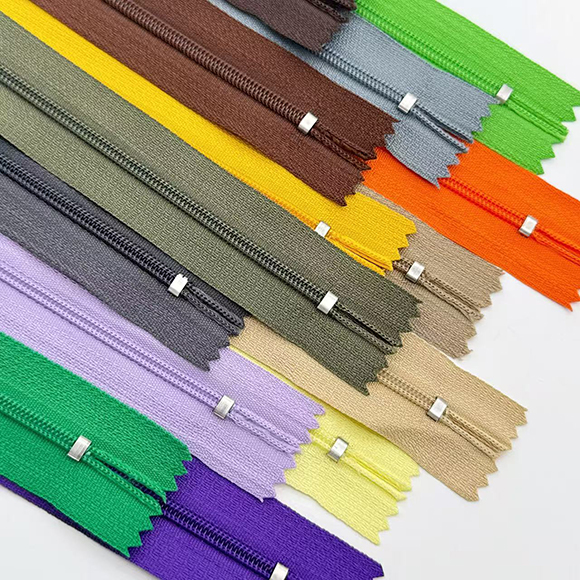
A nylon zipper is made by coiling a continuous nylon monofilament into a spiral of teeth, which is then sewn onto a woven tape. Because the teeth are a flexible coil, this zipper bends around curves and absorbs sideways stress well, and it sits slim and quiet against fabric.
Best for: garments, dresses, lightweight jackets, bags, luggage, cushions and upholstery — anywhere you want flexibility, light weight and a wide color range. It is the most versatile choice and, for many apparel and bag makers, the default.
Metal zipper — strength and a premium feel
A metal zipper has individual metal teeth clamped onto the tape, available in finishes such as brass, nickel and antique tones. Metal teeth are rigid and hard-wearing, which is exactly why they suit straight, heavy-duty seams and a high-end look.
Best for: jeans, denim jackets, workwear, leather goods and bags where durability and a substantial, premium feel matter. Note that metal is less forgiving on tight curves than coil, so it is happiest on straighter runs.
Molded plastic (resin) zipper — light, colorful, rust-free
A plastic zipper has teeth injection-molded directly onto the tape from POM resin. The teeth can be made bold and chunky, come in strong colors, and — because there is no metal — they will not rust when exposed to moisture.
Best for: sportswear, outerwear, children's clothing, outdoor gear and anything that needs a lightweight, weatherproof-friendly closure with visual impact.
Specialty zippers for technical needs
Beyond the three core families, certain products need a purpose-built zipper. These are where a custom factory earns its keep.
Water-resistant zippers
A reverse / waterproof-style zipper typically uses a nylon coil with a film (such as TPU) laminated over the tape and a coated, smooth face, so water is shed at the tape rather than wicking through it. These builds help keep out rain and splash on outerwear, bags and outdoor gear.
One honest note: "waterproof" covers a wide range. Real performance depends on the specific construction, the slider, and how the zipper is set into the garment. If your product needs to meet a defined water rating, tell us the target and the test method up front so we can build and verify to it, rather than assuming a generic claim.
Airtight zippers
An airtight zipper is a sealing closure for applications that need to hold air or keep contaminants out — technical, protective and industrial uses where an ordinary zipper would leak. These are specified by the seal type and pressure requirement, so they are almost always made to the customer's spec.
Woven, metallized and invisible zippers
- Woven zipper: the teeth are woven into the tape in a single piece. This one-piece construction is stronger than a standard sewn-on coil and is a good choice where reliability is critical.
- Metallized plastic zipper: molded plastic teeth finished with a metal-look coating — the appearance of a metal zipper at a lighter weight. Useful when a brand wants the look without the full weight of metal.
- Invisible zipper: a fine nylon coil that disappears into the seam when closed, leaving only the pull visible. Standard on dresses, skirts, fine tailoring and cushions.
The details that decide fit and cost
Once the type is chosen, a few specifications shape both performance and price:
- Size (gauge): often given as #3, #5, #8, #10 — roughly the width of the closed teeth. Lighter garments use smaller sizes; bags and heavy outerwear use larger ones.
- Open-end vs closed-end: separating closures for jackets; closed-end for trousers, pockets and most bags.
- Slider and pull: auto-lock, non-lock, reversible, double-pull — chosen for how the product is opened and how secure the closure must stay.
- Color matching: tape and teeth can be dyed and molded to a brand color. Sending a physical color reference is far more reliable than a screen value, and standard color-card systems make repeat orders consistent.
Why the factory behind the zipper matters
The same "nylon #5 zipper" from two suppliers can perform very differently, because the result depends on tape quality, dyeing, tooth forming and finishing. A factory that controls the whole line — and builds its own machines — can hold those variables steady from sample to bulk, match a specification rather than offer only a catalog item, and keep repeat orders consistent.
That is the role Primo plays: a single source for finished zippers, sliders, stops and molds across nylon, metal, plastic and specialty types, made to your spec.
Quick reference
- Flexible, lightweight, all-purpose → nylon coil
- Durable, premium, heavy-duty → metal
- Lightweight, colorful, rust-free → molded plastic
- Rain and splash resistance → water-resistant / reverse coil
- Sealed, technical, protective → airtight
- Maximum strength, one-piece → woven
- Hidden seam, fine tailoring → invisible
Not sure which fits your product? Send us the application, the load and any water or color requirements, and we will recommend a construction and make a sample to match. Talk to Primo about your zipper.
How to Make Nylon Zippers: A Look at the Process and Machines
Zipper Slider Accessories: Pullers, Stoppers & Components for OEM Buyers